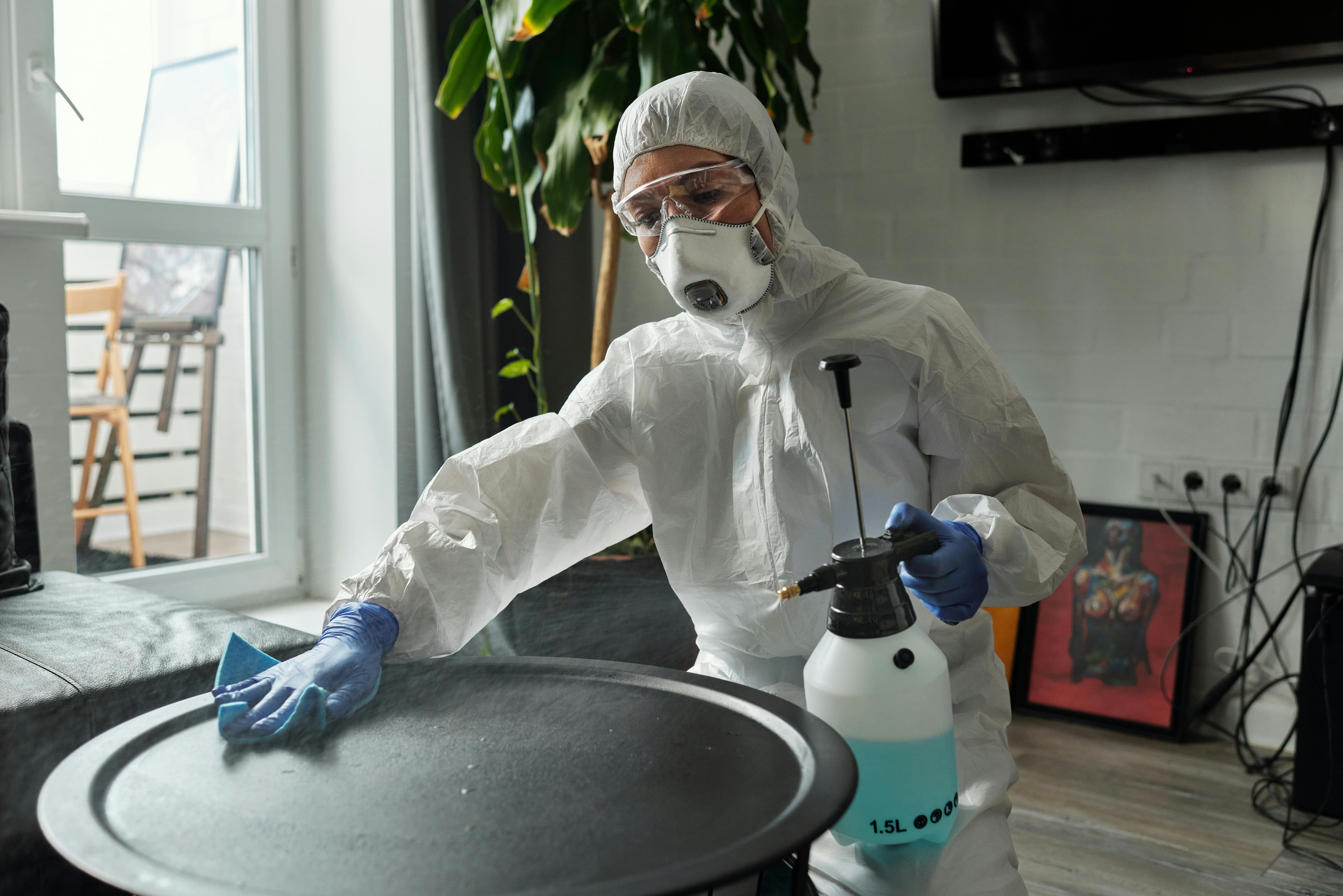
Expert Mold Removal & Remediation
in Burnaby, BC
A top mold removal company in Burnaby for homeowners who want it done right. We find it, we remove it, and we fix what caused it. IICRC certified technicians. Licensed and insured mold remediation services across Metro Vancouver.
Mold Removal & Remediation Services in Burnaby
Full mold removal services and mold remediation services — from a small bathroom patch to attic, basement, or crawl space jobs. Our certified mold removal contractor team handles every step, from first inspection to written air quality clearance.
Mold Inspection & Testing
We find mold you can't see. Thorough inspections with certified air quality testing.
Learn moreMold Remediation
Complete mold removal using industry-standard containment and HEPA filtration.
Learn moreBlack Mold Removal
Safe, thorough removal of toxic black mold by certified technicians.
Learn moreAttic Mold Removal
Burnaby attics are mold hotspots. We clean them out and fix the root cause.
Learn moreBasement Mold Removal
We tackle the damp corners, floor joists, and walls where basement mold hides.
Learn moreCrawl Space Mold Removal
Ground moisture, poor airflow, and old insulation make crawl spaces mold magnets. We clean them out and help stop it coming back.
Learn moreBathroom Mold Removal
Bathrooms are the most common place mold starts. We remove it from grout, drywall, ceilings, and behind tile — and fix the ventilation issues that caused it.
Learn moreCommercial Mold Removal
Office buildings, rental suites, and commercial spaces — we work around your schedule.
Learn morePost-Remediation Testing
Third-party verified air testing confirms the job is done and the air is clean.
Learn moreWater Damage Mold Prevention
Mold starts growing within 24–48 hours of water damage. We treat fast.
Learn moreTypes of Mold Removal & Remediation Projects We Handle
From a single bathroom patch to full attic and crawl space remediation after a failed home inspection — here's the range of mold removal and mold remediation projects our contractor team handles across Burnaby and Metro Vancouver.
Pre-Sale & Real Estate Mold Removal
Home inspectors flag mold in attics, crawl spaces, and basements on a significant share of Metro Vancouver listings. We handle the remediation scope, provide written documentation, and arrange clearance testing — giving buyers, sellers, and realtors what they need to close.
Learn moreAttic Mold Remediation
Attic mold is the most common mold job in Burnaby and across Metro Vancouver. Warm, humid house air condenses against cold roof decking when ventilation fails. We remove the growth, treat the wood, and identify the ventilation correction needed to stop it returning.
Learn moreBasement Mold Removal
Concrete walls wick moisture, insulation traps humidity against framing, and flooding events saturate drywall quickly. Basement mold jobs range from a small patch on a wall to full-scope removal of affected framing, insulation, and subfloor after a flooding event.
Learn moreCrawl Space Mold Remediation
Ground moisture, inadequate cross-ventilation, and damaged or missing vapor barriers make crawl spaces the second most flagged area on home inspection reports in BC. We clean the floor joists, sill plates, and framing — and tell you exactly what moisture corrections are needed.
Learn moreBathroom Mold Removal & Remediation
Surface grout mold is common. The more serious version is structural — mold on the drywall or framing behind shower tile from a slow liner or grout failure. We distinguish between the two, open what needs opening, and treat it properly rather than painting over it.
Learn morePost-Water-Damage Mold
Mold establishes within 24–48 hours of saturation on drywall and insulation. After a burst pipe, appliance failure, or flooding event, we apply antimicrobial treatment proactively, monitor through the drying phase, and provide full mold remediation services if growth is found.
Learn moreBlack Mold (Stachybotrys) Removal
Stachybotrys chartarum requires enhanced containment, full PPE, and complete removal of all affected porous materials. We confirm species through sampling, establish full containment before disturbing anything, and run air scrubbers until third-party clearance testing confirms the space is clear.
Learn moreCommercial & Strata Mold Removal
Mold in a commercial building, office suite, or strata complex creates liability and needs documented resolution. We provide WorkSafeBC-compliant remediation with full written scope, coordinate with property managers, and issue clearance certificates that satisfy insurers and strata councils.
Learn moreHVAC & Ductwork Mold
Mold inside air handling systems and ductwork can distribute spores to every room in the building. When HVAC contamination is suspected, we assess the physical growth, coordinate with an HVAC contractor for duct cleaning, and test air quality after treatment to confirm clearance.
Learn morePost-Remediation Clearance Testing
Third-party air quality clearance testing is the only objective way to confirm a mold remediation job is complete. An independent tester compares indoor spore counts to an outdoor baseline — and issues a written clearance certificate when results pass. Required for real estate deals, insurance claims, and strata sign-off.
Learn moreWhy We're a Top Mold Removal Company in Burnaby
There are plenty of mold removal contractors in Metro Vancouver. Here's why Burnaby homeowners call us once and don't end up back at square one six months later.
A mold remediation contractor who fixes the source
Cleaning mold without addressing the moisture is a short-term fix. As a full-service mold remediation contractor, we identify why it grew and give you a plan to stop it from coming back.
IICRC certified — not just a cleaning crew
Our technicians are IICRC certified and use commercial-grade HEPA air scrubbers, negative air pressure containment, and EPA-approved biocides. What separates a certified mold removal contractor from a handyman with bleach.
Safe containment every time
We seal off the work area before we touch anything. This keeps spores from spreading to the rest of your home during the removal process.
Clear scope before we start
You'll know exactly what we found, what we're doing about it, and what it costs before we begin. No surprise scopes, no hidden add-ons.
Full documentation — inspection through clearance
Before and after photos, air quality readings, and written reports. Useful if you're dealing with insurance, a property sale, or a landlord-tenant situation.
Local Burnaby mold removal contractor
We're not a national franchise dispatching someone from across the region. We're a local Burnaby mold removal contractor — we know Metro Vancouver homes, and we'll actually pick up the phone.
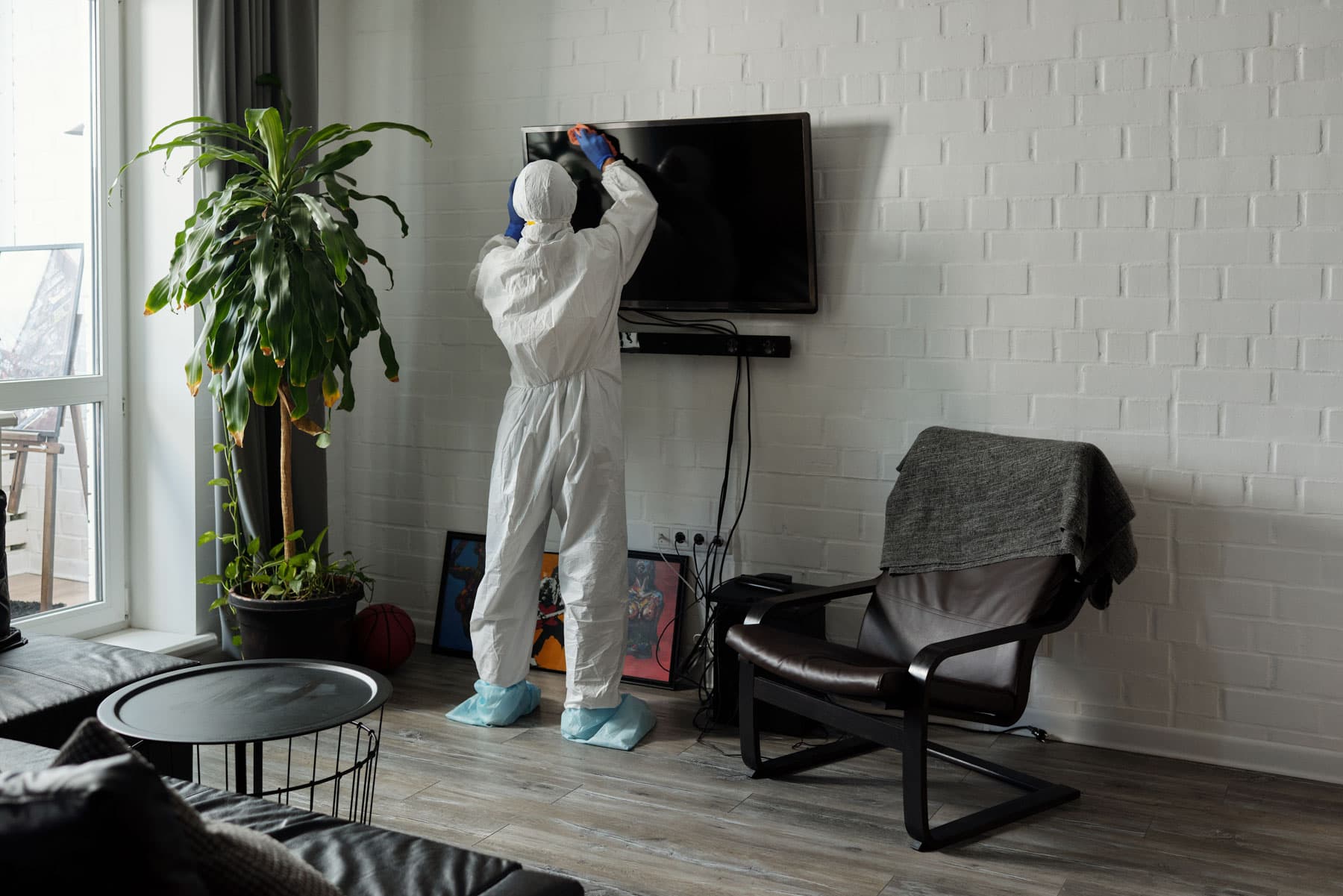
Technical Authority
Mold Removal Engineering: How the Work Is Actually Done
Professional mold removal is an engineering problem as much as a cleaning job. Containment, airflow, filtration, chemistry, and clearance standards all have to work together. Here's the technical breakdown of how a properly executed mold removal contractor job works — from critical barriers to clearance certificate.
Containment & Critical Barriers
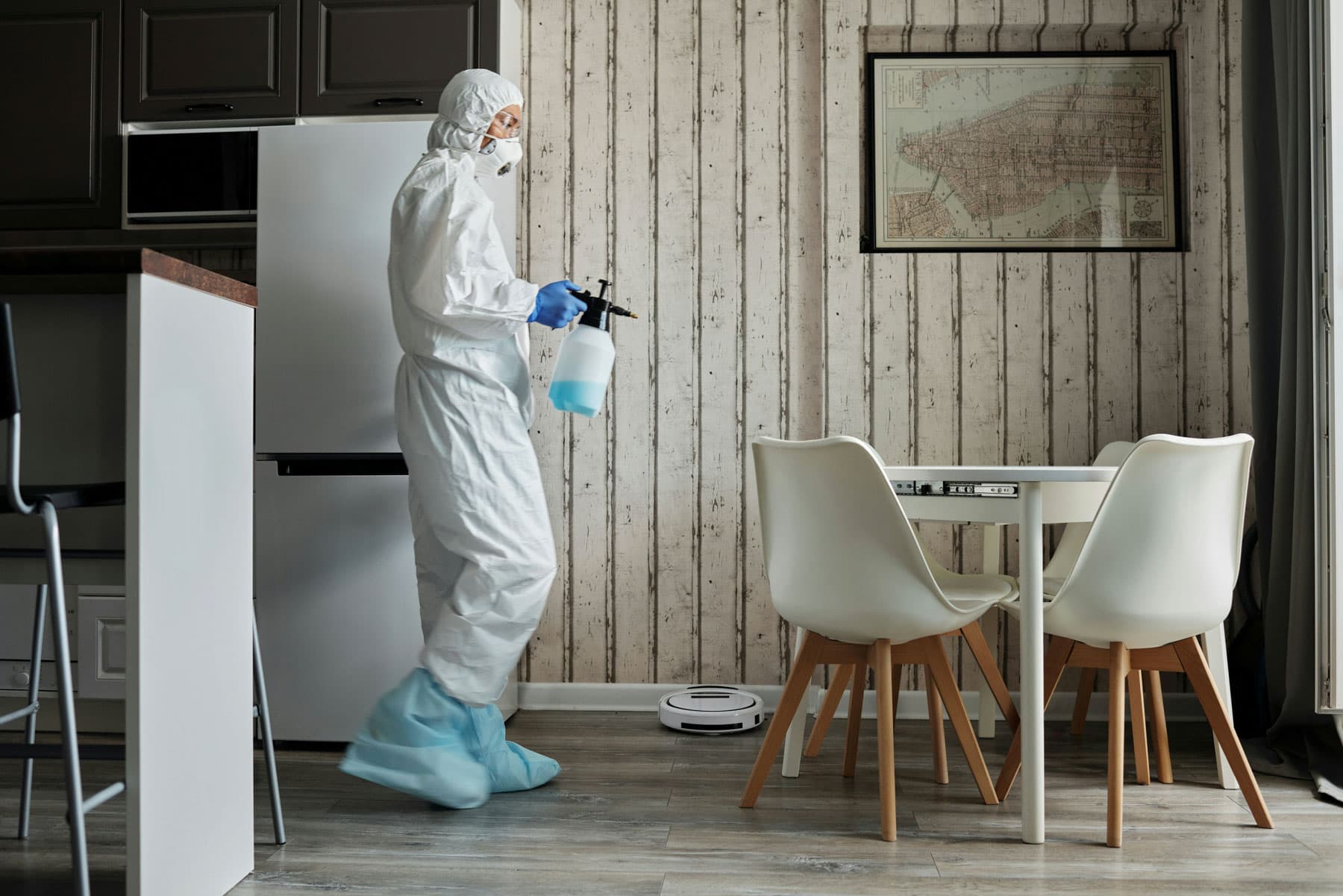
Before any material is disturbed, the work area is isolated using 6-mil polyethylene sheeting sealed with tape at all edges, seams, and penetrations. Zipper-door entry points allow access without breaking the seal. The goal is a critical barrier: air cannot move freely between the containment zone and adjacent living areas. This step is non-negotiable — disturbing mold without containment in place spreads spores throughout the structure via air currents and HVAC systems.
Negative Air Pressure
HEPA air scrubbers are configured to exhaust air from inside the containment zone to the exterior — typically through a window or a ducted path out of the building. This creates negative pressure inside the containment relative to surrounding areas: any air leakage flows inward, not out. The result is that aerosolized spores generated during mold removal are captured before they can migrate. IICRC S520 specifies maintaining a minimum negative pressure differential of 0.02 inches WC for effective containment.
HEPA Air Scrubbing & ACH
HEPA filtration captures particles at 0.3 microns with 99.97% efficiency — well below the size of common mold spores (Cladosporium: 2–7 µm, Stachybotrys: 6–12 µm). The required air changes per hour (ACH) inside a containment zone depends on the level of contamination: IICRC S520 recommends a minimum of 4 ACH for Level 2 contamination, higher for Level 3 (greater than 100 sq ft of visible growth). Scrubber sizing is calculated against the cubic footage of the containment space, not as a one-size-fits-all approach.
Personal Protective Equipment Protocols
PPE requirements scale with contamination level. At minimum, our technicians wear N100 half-face respirators (not dust masks — N100 has true HEPA-equivalent filtration), disposable Tyvek coveralls, nitrile gloves, and eye protection. For Stachybotrys or larger-scale contamination, full-face respirators and enhanced suit protocols are used. A decontamination sequence is followed on exiting the containment zone: HEPA vacuum of suit, suit removal, glove removal, respirator removal — in that order — to prevent transfer of spores to clean areas.
Mechanical Mold Removal
Biocides don't replace mechanical removal on porous materials — they follow it. The physical removal sequence: HEPA vacuuming of loose surface growth, wire brushing or sanding of stubborn growth on wood grain, followed by a second HEPA vacuum. Drywall that cannot be fully decontaminated is cut out along clean lines and removed in sealed bags. Aggressive mechanical removal reduces the mold load before biocide application, improving penetration and efficacy on the remaining surface.
Biocide Chemistry & Application
Bleach (sodium hypochlorite) is not appropriate for porous materials — it's roughly 95% water, which penetrates the substrate and feeds mold while the chlorine evaporates off the surface. EPA-registered biocides used in professional mold remediation include quaternary ammonium compounds (quats), hydrogen peroxide-based products, and borate treatments for wood surfaces. Borate compounds (disodium octaborate tetrahydrate) penetrate wood grain and provide residual protection against fungal regrowth. Dwell time after application is critical — products require sufficient contact time to be effective.
Visual Clearance Before Testing
Before clearance testing is requested, a visual clearance check is performed: no visible mold growth, no visible dust or debris in the remediated area, all materials removed as specified, and the area is dry. IICRC S520 is explicit that visual clearance must be achieved before air sampling — testing over visible mold growth produces predictably elevated results and adds cost with no value.
Post-Remediation Clearance Standards
Clearance air sampling follows ASTM or AIHA-accredited lab protocols. Results are evaluated by comparing indoor spore concentrations and species profile to a simultaneous outdoor baseline sample. The clearance criteria: indoor counts at or below outdoor levels for the same species, and no indoor species absent from the outdoor sample (which would indicate an active indoor source). A passing result triggers issuance of a written clearance certificate — the document that satisfies insurers, property managers, buyers, and lenders.
How the Mold Remediation Process Works
No guesswork. Here's how our mold removal contractor team works — from your first call to a written air quality clearance certificate.
Call or Request an Estimate
Give us a call or fill out the form. We'll ask a few quick questions about what you're seeing and set up a time for your mold removal contractor to inspect.
Certified Mold Inspection
Your mold remediation contractor visits the property, assesses the full scope, identifies the moisture source, and confirms species if needed.
Containment & Removal
We seal off the area, set up negative air pressure, and remove mold using HEPA vacuums and EPA-approved biocides — done to IICRC S520 standards.
Treatment & Prevention
Affected materials are treated or removed. We address the root cause — ventilation, waterproofing, or repairs — so it doesn't come back.
Clearance Testing
Third-party air quality testing confirms spore counts are back to normal. You get the written clearance certificate.
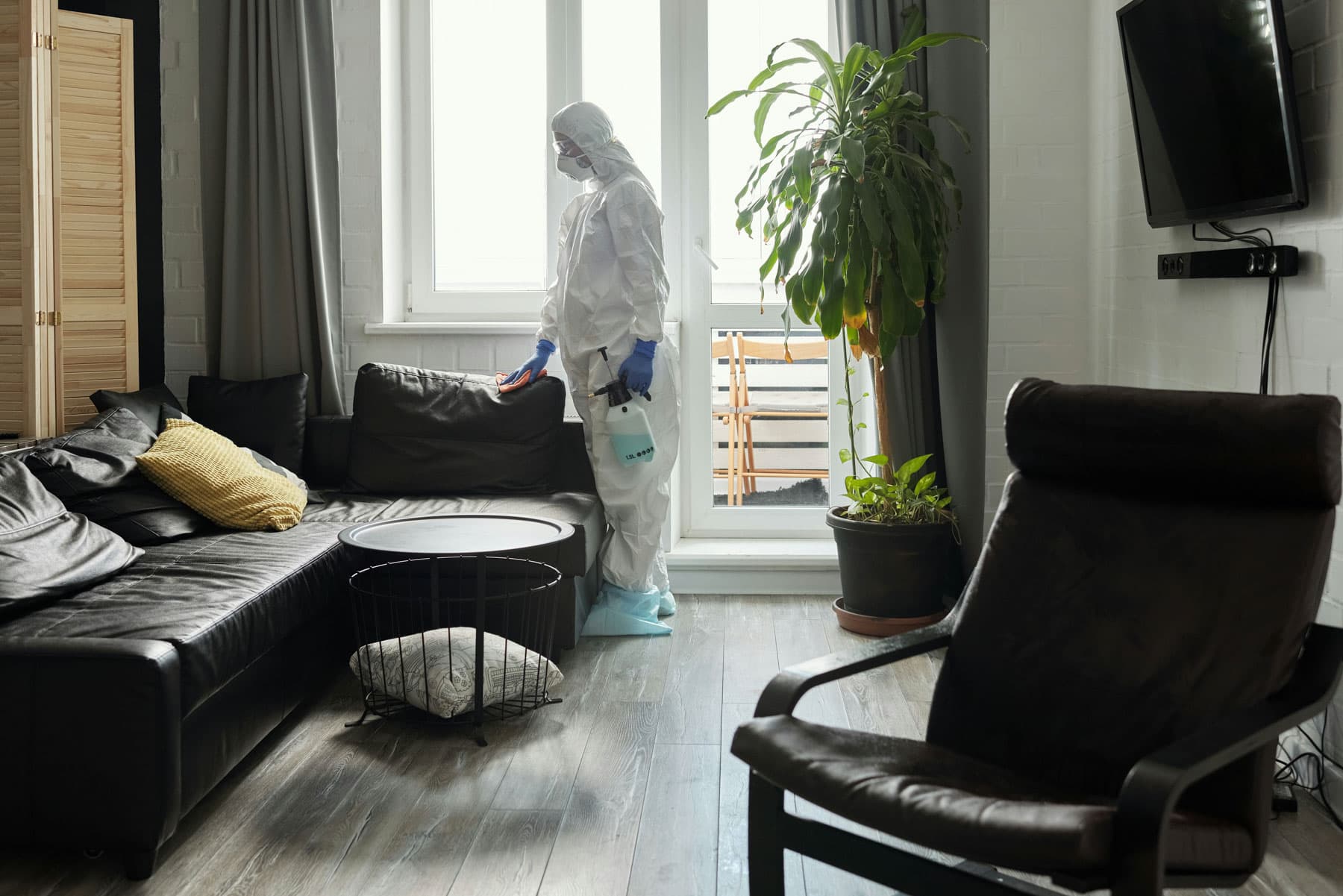
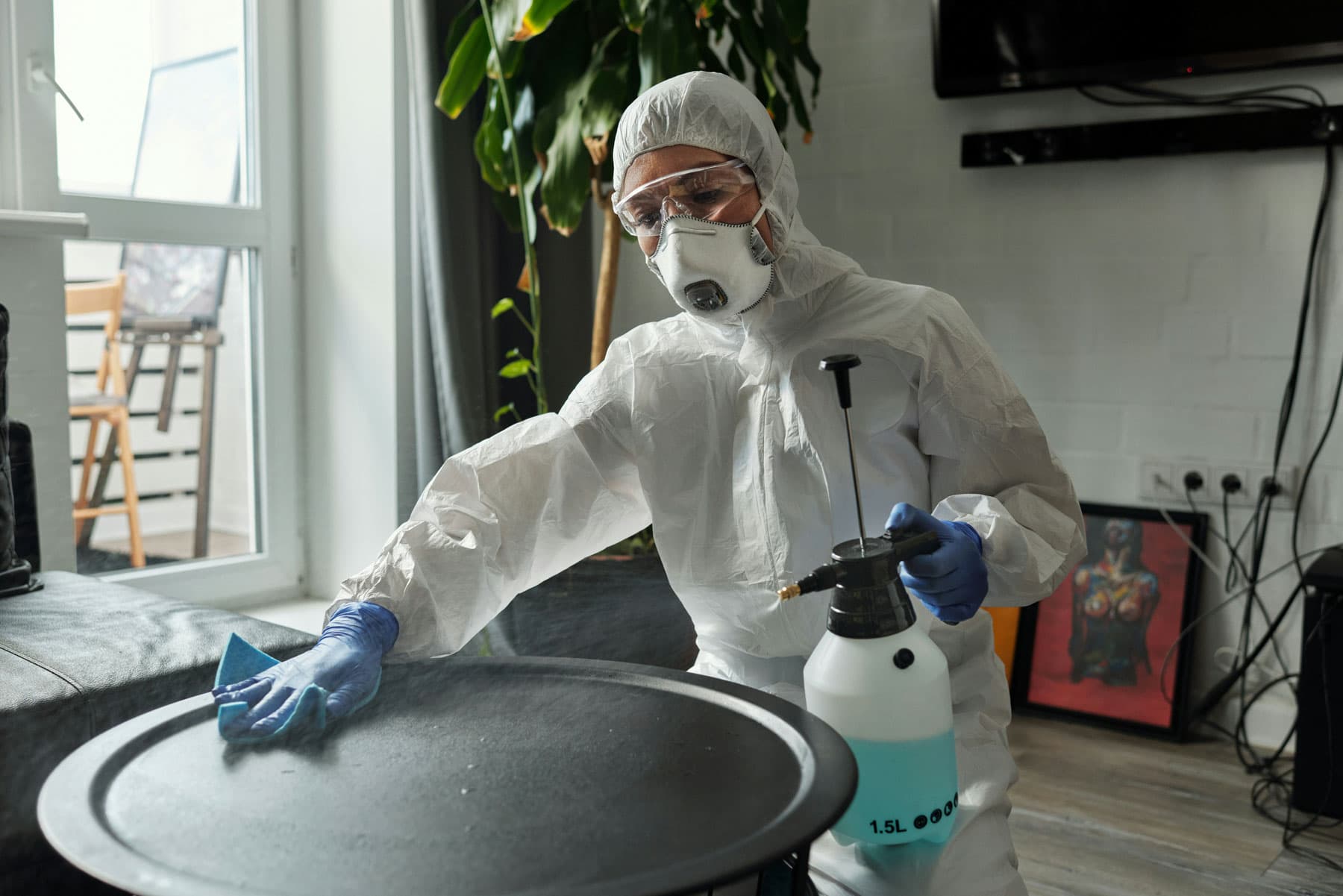
Materials Science
Mold Remediation Engineering: Materials, Substrates & Building Science
Not all materials respond to mold the same way — and not all mold remediation is the same job. Whether it's drywall, attic sheathing, floor joists, or insulation, the treatment approach depends on the material, the depth of penetration, and the moisture pathway that caused it. Here's how we think about it.
Drywall & Gypsum Board
Typically: Remove & Replace
Drywall is the most common mold substrate in residential mold remediation. The paper facing on standard gypsum board is cellulose — an ideal food source for mold. Moisture penetrates the paper facing and gypsum core readily. Once mold has colonized the paper face or penetrated the core, the material cannot be decontaminated in place. IICRC S520 treats drywall as Category 1 porous material: if mold is confirmed, remove it. The exception is fiberglass-faced or paperless gypsum board, which has meaningfully lower mold susceptibility.
Dimensional Lumber & Wood Framing
Surface: Treat. Structural: Assess carefully.
Wood framing presents differently from drywall. Mold on dimensional lumber is typically surface colonization — the mycelium grows in the outer layer of the wood grain rather than deeply penetrating the structural member. IICRC S520 distinguishes between surface mold (treatable by wire brushing + biocide + encapsulation) and deep penetration with structural compromise (requires replacement). Rusted fasteners and nail heads are reliable indicators of chronic wetness. Borate-based biocides (disodium octaborate tetrahydrate) penetrate wood grain and provide residual antifungal protection after treatment.
OSB & Plywood Roof Sheathing
Treat when sound; replace when delaminating.
Oriented strand board (OSB) attic decking is more susceptible to moisture than plywood because its resin-bonded wood strand construction absorbs water through exposed edges and facer surfaces. Mold treatment on attic sheathing involves HEPA vacuuming, wire brushing, biocide application, and encapsulation coating. If the OSB has swollen, delaminated, or shows the fibrous surface breakdown characteristic of long-term moisture exposure, the structural integrity is compromised and replacement is the right call — a cosmetic treatment on structurally degraded sheathing is not adequate.
Insulation Materials
Batt: assess. Cellulose: remove. Spray foam: durable.
Fiberglass batt insulation doesn't support mold growth on its glass fibres, but it can hold moisture against adjacent wood framing and serves as a reservoir that prevents wood from drying out. Batts that have been saturated and dried multiple times often show biological growth on the kraft paper facing or embedded debris. Cellulose insulation (common in older Burnaby attics and walls) is ground paper — mold grows directly in it after moisture exposure and it must be removed. Closed-cell spray polyurethane foam is inherently mold-resistant and acts as a vapour barrier; open-cell foam is more permeable and can absorb moisture in high-humidity conditions.
Vapor Barriers & Moisture Control
The single most important prevention measure.
Vapor barriers in crawl spaces and basement walls control ground moisture migration — the primary driver of mold in those spaces. BC Building Code requires a minimum 6-mil polyethylene vapor barrier in crawl spaces, but current best practice is 10–20 mil reinforced sheeting for durability. Correct installation: 100% soil coverage, minimum 150mm overlap at seams, taped or weighted seams, and sheeting run up the foundation wall a minimum of 150mm. A torn, inadequate, or missing vapor barrier continuously supplies the moisture that makes mold remediation temporary rather than permanent.
Encapsulation Coatings
A final barrier over treated wood surfaces.
Encapsulation coatings are applied over properly cleaned and biocide-treated wood surfaces as a final barrier. Mold encapsulants are typically antimicrobial-infused acrylic or epoxy-based coatings that seal the treated wood surface, lock in any residual dead mold material, and provide a surface that resists future colonization. They are not a substitute for mechanical removal and biocide treatment — they follow those steps. Encapsulants are particularly common in attic remediation jobs where large areas of treated sheathing benefit from a sealed surface after cleaning.
Material Removal Protocols
Double-bag, seal, transport out of containment.
All mold-affected materials removed from a job site — drywall, insulation, contaminated wood sections — are double-bagged in 6-mil polyethylene bags, sealed with tape, and wiped down before leaving the containment zone. This prevents spore transfer to clean areas during transport through the home. In Metro Vancouver, disposal follows WorkSafeBC and Metro Vancouver guidelines for contaminated waste. Leaving mold-contaminated materials stacked in an unsealed area (garage, driveway, etc.) before disposal is a common mistake that causes cross-contamination.
Building Envelope & Moisture Pathways
Where water enters determines where mold grows.
Understanding building envelope failure is fundamental to mold remediation work in Burnaby and Metro Vancouver's climate. Common moisture pathways: attic condensation from blocked soffit-to-ridge ventilation; foundation walls with inadequate exterior drainage or missing drainage plane; wall assemblies with reversed vapour profile (vapour barrier on the wrong side for BC's mixed climate zone); window and door flashing failures; and grade sloping toward the foundation. Addressing the moisture pathway — not just treating the mold — is what distinguishes a remediation that lasts from one that gets called back six months later.
Why material knowledge matters in mold remediation
A mold remediation contractor who treats every material the same way — spray bleach and call it done — is guaranteeing callbacks. Different substrates need different approaches: drywall comes out, wood gets treated and encapsulated, insulation depends on type and saturation level, and the vapour barrier situation gets assessed on every crawl space and basement job. That's how you fix the problem instead of buying time.
Mold Removal Across Burnaby & Metro Vancouver
We're based in Burnaby and provide mold removal services and mold remediation services across Metro Vancouver. Our crews know the local housing stock — the older crawl spaces, the attic ventilation issues common to Burnaby homes, and the moisture challenges that come with our climate.
Got Questions About Mold?
Straightforward answers to what people usually ask us.
Need a Mold Removal Contractor in Burnaby?
Call us or fill out the form. We'll get a certified technician to you quickly for mold removal and remediation services.
Available 24 hours a day, every day of the year.